
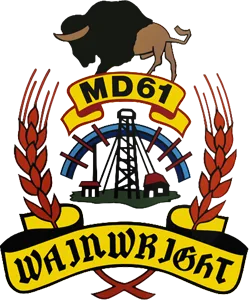

The roadside mowing program improves sightlines along municipal roads, helps reduce the risk of wildlife collisions, and supports the M.D.’s integrated vegetation management program.
Mowing typically begins around July 8, subject to seasonal and weather conditions, and is completed no later than August 31. Contractors mow designated municipal roads approved by Council under the direction of the Agricultural Services Department.
Priority is given to:
- School bus routes
- Paved roads
- Heavily travelled municipal roads
As a result, not all municipal roads are mowed each year.
Haying Municipal Ditches
A permit is not required to hay municipal ditches. Contracted mowers will leave existing swaths for haying where possible. If no swath is present, designated roads will be mowed as scheduled. Bales must be removed from the municipal right-of-way within 24 hours for public safety.
Please see the map below which depicts the typical roads scheduled for mowing. Note the map below is subject to change on an annual basis. For questions or concerns regarding this program please call 780-842-4454.
The roadside spray program manages regulated weeds, local species of concern, and encroaching woody vegetation within M.D. rights-of-way. Work typically begins around June 1, subject to weather conditions.
Brush Spray Program: The brush spray program operates on a two-year rotation. Each year, approximately half of M.D. roads are spot treated for brush under two meters in height. Trees over two meters in height may be addressed by the Public Works Department through mulching.
Blanket Spray Program: The blanket spray program operates on a three-year rotation. Approximately one-third of M.D. roads are treated each year to manage regulated weeds, local species of concern such as kochia, and general weeds—including yellow sweet clover—that can create sightline concerns. All remaining municipal roads are inspected annually, and regulated weeds may be spot treated as needed.
Selective herbicides are used in accordance with product label directions. Applications are not conducted within 150 feet of:
- Yard sites and acreages
- Mowed areas in front of a property
- Shelterbelts
Exceptions may be considered where requested and approved by the landowner. M.D. applicators treat ditches up to, but not beyond, property fence lines unless the landowner participates in the Fenceline Spray Program
M.D. applicators hold current pesticide applicator licenses with the appropriate Alberta designations for industrial and agricultural pesticide use. Digital application records are maintained for regulatory compliance. Records include the treatment area, product used, application rate, and weather conditions at the time of application.
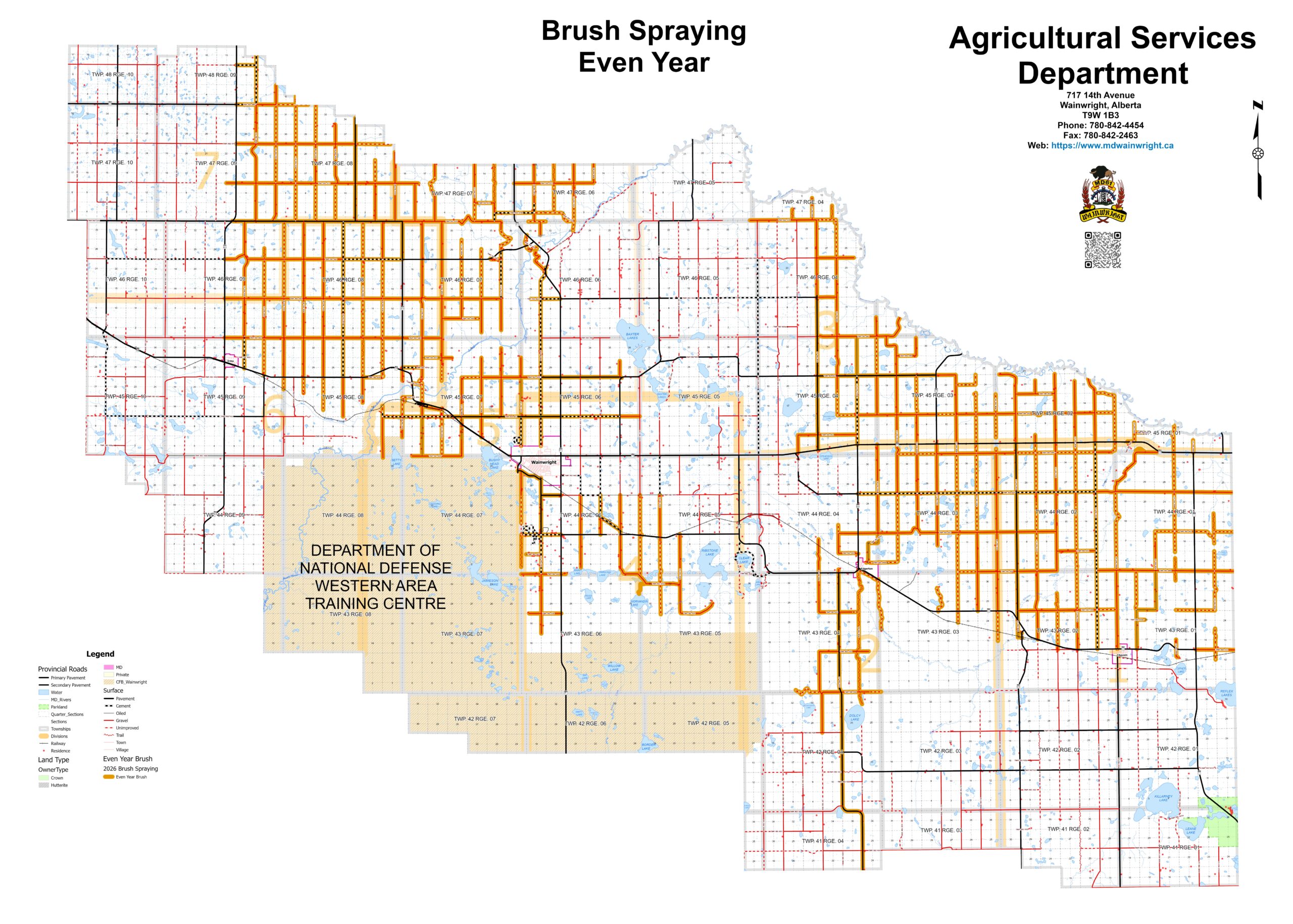
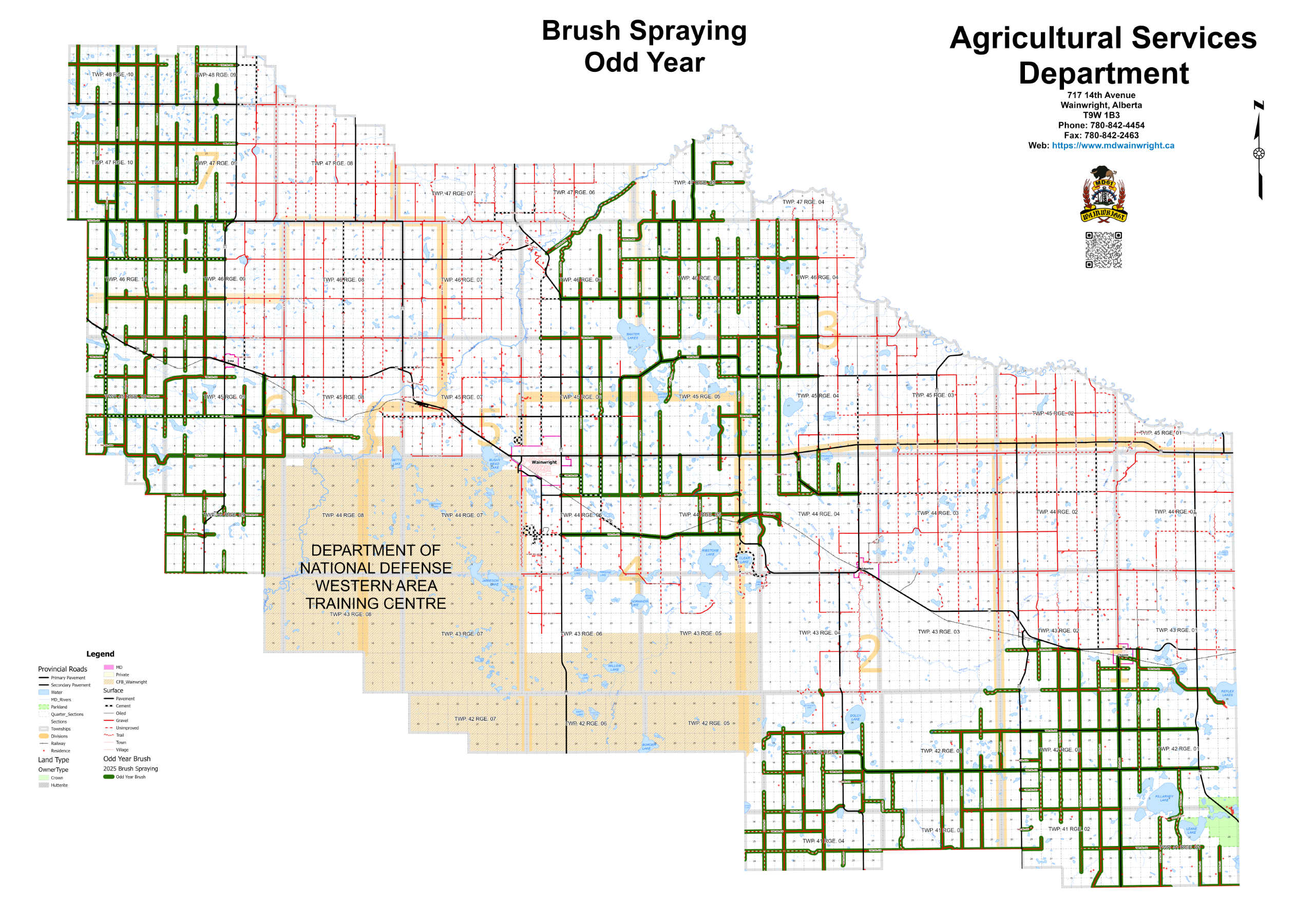
There are three spray programs available for M.D. of Wainwright landowners to participate in:
Private Spraying: The Agricultural Services Department offers private spraying services to help M.D. landowners manage regulated weeds for a fee. To request a weed inspection or discuss a private spraying project, contact your area weed inspector or Agricultural Services at 780-842-4454. This service is intended specifically for regulated weed control. Service timing depends on applicator workload, and large-scale or inaccessible projects may not be accommodated. A current Hold Harmless Agreement must be completed or confirmed on file before treatment can occur.
Fenceline Spray Program: Landowners and grazing leaseholders may apply to have eligible fence lines adjacent to developed M.D. roads sprayed as part of the regular vegetation management program. To be included in the annual program, submit a completed agreement to Agricultural Services by May 1. In-season requests may be considered if eligibility requirements are met and an agreement has been completed.
No Spray/Delayed Spraying Program: Landowners may apply for one of the following options for ditches adjacent to their property:
A) No Spray: A landowner may request that adjacent ditches be excluded from the M.D.’s roadside vegetation management program. The landowner is then responsible for managing vegetation through an alternative method, including the control of all regulated weeds and brush under two meters in height. Review the conditions of the agreement below.
B) Delayed Spraying: A landowner may request that roadside spraying be delayed until after July 15 to allow for haying. Haying must be completed by July 15, after which the ditch returns to the regular vegetation management program. Review the conditions of the agreement below.
Completed agreements must be submitted by May 1 each year. Agreements are valid for one year only.
An agreement may not be necessary in some circumstances. For example, spraying is not normally conducted in front of yard sites or acreages, and some roads may not be scheduled for blanket spraying in a given year.
Please review the program information below:
Agricultural Services works with Public Works on vegetation management and reclamation projects associated with road construction, borrow pits, and gravel pits. Public Works completes site preparation, while Agricultural Services manages seeding and revegetation.
The M.D. also works with the 3rd Canadian Division Support Base and the Town of Wainwright to support weed control efforts within their respective jurisdictions.
Seed-Cleaning Plant Licensing and Inspection – the M.D. licenses and inspects seed-cleaning plants operating within the municipality. Licensing and inspections help confirm that facilities meet applicable provincial requirements for seed-cleaning operations.
Regulated weeds can affect agricultural productivity, native vegetation, and municipal infrastructure. Landowners have an important role in identifying and managing weeds on their property.
Visit the Invasive Species page to learn about regulated weeds, identification, and management responsibilities.